


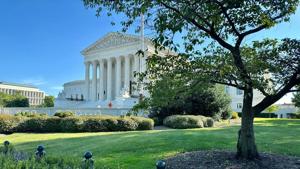
The U.S. Supreme Court will hear arguments in cases on pregnancy discrimination, universal preschool and immigrant labor regulations in November.
The high court announced it will consider arguments in seven cases during the month of November as justices prepare to begin the upcoming judicial term.
Immigrant Labor
On Nov. 10, justices on the high court will hear arguments in Department of Labor v. Sun Valley Orchards, a case that will determine whether federal agencies are able to oversee disputes over migrant farm workers in the United States.
The case focuses on a New Jersey farm that was accused of violating an employment agreement under the H-2A visa program, a federally administered system that allows immigrant agricultural workers to serve in temporary or seasonal jobs.
The U.S. Department of Labor accused Sun Valley Orchards of failing to provide adequate housing, meal plans, transportation and work hours for employees on H-2A visas. The Labor Department charged the farm hundreds of thousands of dollars in liabilities for the alleged violations.
“Administrative adjudications provide an efficient mechanism for ensuring that employers who participate in that vast program comply with those terms and conditions,” the lawyers for the government wrote in a brief to the court.
Lawyers for the Department of Labor said it is the federal government’s responsibility to adjudicate disputes with farms to ensure American citizen workers are not disadvantaged.
However, lawyers for Sun Valley Orchards said the Department of Labor overstepped its constitutional authority in charging the farm for alleged labor violations. The lawyers argued that the judicial branch is only allowed to have statutory authority to pursue potential labor violations.
Lawyers for the farm said federal authorities overstepped when charging for alleged violations without allowing a court proceeding to move forward in determining whether fines could be enforced.
“There is no precedent or history supporting agency adjudication of such employment-related issues,” lawyers for the farm wrote. “The government’s contrary argument would vastly expand the public rights exception for immigration-related claims to encompass myriad issues involving temporary workers.”
The high court’s decision in the case could affect farms across the country that employ immigrant workers.
Religious Discrimination
On Nov. 3, the high court will hear arguments in St. Mary Catholic Parish v. Roy, a case challenging school choice opportunities in Colorado.
The state requires parents to agree with a nondiscrimination policy in order for children to participate in its universal preschool program. The agreement requires preschool providers not to enroll or deny families based on sexual orientation, religious affiliation, income, race, disability or gender identity.
However, the archdiocese of Denver and two of its parishes said the nondiscrimination agreement violated the Catholic faith by requiring schools to hire LGBT teachers or enroll LGBT families.
Lawyers for the Catholic preschools said Colorado employed a double standard on students by incentivizing those with disabilities to enroll in schools as part of the preschool program.
“Colorado doesn’t disagree it is interfering with the religious exercise of parents and schools,” lawyers for the parishes wrote. “Instead, it says it is perfectly fine to exclude Catholic preschools while letting in preschools preferring those with disabilities, limited income, or LGBTQ identity.”
Lawyers for Colorado said the state did not place a preference on individuals with disabilities or children from low-income families.
“Preschools that prioritize children with disabilities and children from low-income families do not deny equal opportunity based on disability or income level in violation of UPK’s statutory equal-opportunity requirements,” lawyers for the state wrote.
The case will represent a significant test of requirements for organizations receiving taxpayer dollars to provide preschool services in Colorado.
Pregnancy Discrimination
The nation’s highest court will also hear a case challenging work discrimination guidelines based on pregnancy in Georgia.
The case, Younge v. Fulton Judicial District Attorney’s Office, focuses on Jasmine Younge, a woman who alleged pregnancy discrimination after she was fired from her position as deputy chief of staff and director of programs for Fulton County District Attorney Paul Howard.
Government employees could allege pregnancy discrimination if they had a reason to believe it is true under Title VII. However, personal staff of a government official is not afforded the same process.
Lawyers for the Fulton County District Attorney’s Office argued that Younge was a member of personal staff and could be fired at any time, regardless of the reason.
“[The] District Attorney’s Office provided express and unequivocal notice in its answer that Younge was a member of the district attorney’s personal staff,” lawyers wrote.
As a member of Howard’s personal staff, Younge would not have the right to file a lawsuit for pregnancy discrimination. Instead, she would have to go through an adjudication process under the Government Employees Rights Act.
“The critical decisions by Younge that channeled this case into district court had been made in 2019, more than two years before the defendant first asserted that Younge’s claim was not covered by Title VII,” lawyers for Younge wrote in a petition to the high court.
A decision in the case could have significant consequences for pregnancy discrimination lawsuits in the future.
Justices on the high court will hear arguments in these cases and more in November. Decisions in these cases will likely be released in 2027.