


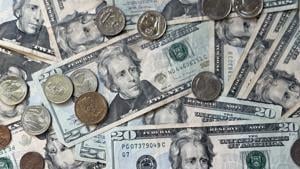
Political parties spent a record-breaking $11.8 billion in advertising for the 2026 midterm elections, with varying results across the country.
Democrats spent $5.02 billion, Republicans spent $5.45 billion and independent groups spent $1.40 billion on advertising materials, according to data collected by AdImpact.
The data surpasses even the last 2024 presidential cycle, where advertising costs reached $11.1 billion, the first time spending exceeded $10 billion.
In critical races across the country, Republicans outspent Democrats by millions of dollars with little success. In Texas, Republicans spent $483 million more than Democrats to promote candidates throughout the state. A key Democrat, Sen.-elect James Talarico, spent more than $126 million on his campaign.
In Kansas, Democratic candidate Adam Hamilton unseated Sen. Roger Marshall in a state Republicans held a $25 million spending advantage. The U.S. Senate race in Ohio topped all Senate race spending across the country with $292 million spent overall.
Travis Trawick, CEO of FullPAC, a political technology provider, said the political environment over the U.S. military conflict with Iran made positive Republican outcomes considerably more difficult.
“All the money in the world wasn’t going to save them this cycle,” Trawick told The Center Square. “There were too many headwinds they were dealing with that having a marketing budget doesn’t really move the needle on.”
The race for U.S. House in Florida’s 25th congressional district was the most expensive in 2026, with $45 million spent between Rep. Jared Moskowitz, D-Fla., and Republican Scott Singer. Moskowitz went on to win reelection in the redrawn congressional district.
Trawick pointed to the high gas prices amid the conflict in Iran, Trump’s historic disapproval and concerns over corruption as key motivating factors in the midterm outcomes.
“What the voters are saying is: ‘What we voted for two years ago, the Republicans having all the resources possible didn’t equate to anything changing my day-to-day life. So let’s go into the next thing,"” he said.
FullPAC supported more than 6,000 campaigns and organizations in the midterm cycle. Broadcast television raked in nearly half of all spending with $5.84 billion toward the medium in 2026.
The Ohio governors race between Republican Vivek Ramaswamy and Democrat Amy Acton cost $120 million. Acton went on to win the country’s most expensive governor’s race in 2026.
Digital advertising took in $1.78 billion, cable received $1.27 billion and radio received $284 million throughout the election cycle.
While financial advantages hold significant power with what voters are exposed to, Trawick said the methods to reach voters are not as effective. He said the 2026 midterm elections showed a larger proportion of voters who are willing to cross partisan lines to serve as a rebuke toward the party in power.
“I think that it’s clear that you have voters that maybe don’t identify as independent, but the actual issues that they care about, they do cross over the aisle,” Trawick said. “People are not as black and white in their issues and their levels of importance.”
Amy Walter, an analyst at The Cook Political Report, said Democrats capitalized on a diversity of candidates who could win races across the country. She said the lack of a central Democratic leader aided each candidate in providing a unique perspective in the state.
“One of Democrats’ biggest advantages this cycle was that they were effectively leaderless which freed Democratic candidates running in these individual states to drive their own messages,” Walter said in a press conference.
Republicans in Congress blamed inefficient messaging for poor party performance. Reps. Troy Nehls, R-Texas, and Rich McCormick, R-Ga., acknowledged the party’s spending advantage did not translate to electoral success.
“It was a horrible election year,” Nehls told reporters. “I mean, I think the American people have a right to be upset with our performance, our performance as Congress as a whole.”
While money does not account for all the issues candidates face, Trawick said it can still make a significant difference in getting a message out. Republicans and Democrats spent within $5 million of one another in Mississippi, where a tight U.S. Senate race will determine if Sen. Cindy Hyde-Smith, R-Miss., retains her seat.
Trawick said the midterm elections proved that targeted political messaging can be effective in winning over persuadable voters.
“Being able to do [win] in a way that we’re targeting the right voters at the right time with a message that resonates instead of this kind of blanket approach that has been the only way to do politics for ever until now,” Trawick said.
Trawick said he anticipates spending to increase exponentially in the 2028 presidential election cycle.
“The next presidential cycle is undoubtedly going to break this midterm cycle,” Trawick said. “We’re going to see north of [$12 billion] for sure in the next presidential cycle.”