


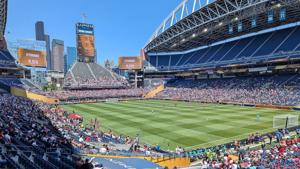
With the largest World Cup sporting event taking place in history in the United States, the Fédération Internationale de Football Association (FIFA) is already under investigation by Democratic and Republican attorneys general for alleged price gauging and misrepresenting ticket sales and seat categories.
Reports of fraud are also rampant and concerns about national security policies and terrorism threats have been raised, The Center Square reported.
A record 48 teams are competing in the international competition from June 11 through July 19 in Canada, the U.S. and Mexico. The U.S. has the greatest number of host cities.
U.S. host cities include Atlanta, Boston, Dallas, Houston, Kansas City, Los Angeles, Miami, New York/New Jersey, Philadelphia, Seattle and the San Francisco Bay area. The first match in the U.S. is in Los Angeles, where Team USA is playing Paraguay on Friday.
More than 5 million tickets have been sold; there are still nearly 200,000 tickets left unsold on the resale market.
Multiple complaints have been made to state attorneys general about FIFA ticket sales.
Fans in multiple states have said they were misled about the location of the seats they purchased tickets for. Seats are sold in four zones, categories 1-4, with the first category having the best seats. After fans bought tickets, FIFA is accused of creating new zones with more expensive tickets. Those who already bought tickets in four categories were reassigned less-desirable seats, including far away from the field. Some fans also reported not receiving tickets in the category they paid for at all, state attorneys general have said.
The attorneys general of New York and New Jersey launched an investigation into FIFA’s ticketing practices to determine if fans were “misled about the locations of the seats they were purchasing, and FIFA’s public statements and ticket releases may have contributed to soaring prices.”
They subpoenaed FIFA seeking information about its ticketing practices, specifically for eight matches being held in New Jersey, including the World Cup final on July 19.
Premium seats at the final match cost more than $10,000.
Texas Attorney General Ken Paxton launched a similar investigation Tuesday in response to similar complaints his office has received. Fans said they paid for seats then were assigned different seats in less desirable areas, he said.
“One report detailed how a fan bought ‘Category 1’ seats, expecting premium views of the field. However, after the purchase, FIFA adjusted the seat maps to move these seats to what was originally designated as ‘Category 2,’ which has less optimal views of the field,” Paxton’s complaint states.
World Cup tickets are being sold for matches in Arlington and Houston. Paxton’s office is investigating whether FIFA violated Texas Deceptive Trade Practices Act and Texas Business and Commerce Code.
The secondary ticket market is also cause for concern, North Texas based Texas Law Dog Matthew Aulsbrook says.
“The average resale ticket is sitting at $1,603, while the lowest ‘get-in’ price for the US Men’s National Team opener has broken $1,000. This extreme pricing has caused a surge in defensive web activity,” he said.
“Because fans are arriving at the ticket-buying phase already financially drained, they are desperately hunting for deals, and walking straight into the arms of fraudsters,” Texas Law Dog told The Center Square in an interview. “Research into major sports events by Texas Law Dog finds that this World Cup fraud surge is on track to be the largest single-event scam wave in U.S. history.”
Aulsbrook identified three types of scams that he says cause the most financial losses. They include an “Off-Platform Pivot,” where a seller lists a ticket on mainstream marketplaces like StubHub, SeatGeek or Ticketmaster, then pressures the buyer to move the conversation to WhatsApp, Zelle, or Cash App to ‘avoid platform fees.’ Once paid, the seller blocks the buyer” and their money is stolen.
Others include a “Static Ticket Scam, where fraudsters are selling nonworking PDFs, screenshots or printed tickets, and fake websites and phishing alerts. Fraudsters are sending fake ‘ticket transfer’ or ‘stadium transit pass’ email alerts designed to steal their financial information,” he says.
“What makes this wave of fraud different from past World Cups is the role artificial intelligence now plays. Threat actors are using AI-generated content to produce phishing emails, smishing messages, and fake websites at a pace that no single security team can easily track,” Cyber Security News reports.
“The result is a fraud landscape that is faster, more convincing, and harder to contain than anything seen before the era of generative AI. The threat does not stop at individual fans. Corporate sponsors, affiliated vendors, travel providers, and ticketing platforms are all in the crosshairs.”
The FBI also issued a warning about spoofing FIFA websites that are used to steal personal information and facilitate monetary scams. It encourages Americans to remain vigilant and report cybercrimes to the FBI’s Internet Crime Complaint Center.