


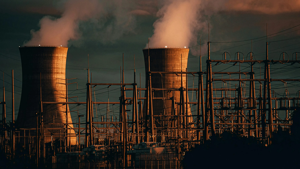
The U.S. Department of Energy announced the selection of Tennessee, Louisiana, Utah, Oklahoma and Idaho as potential host states for Nuclear Lifecycle Innovation Campuses aimed at modernizing the nation’s nuclear fuel cycle.
“I’m pleased to announce that after reviewing 28 applications from 26 states, the Energy Department has selected five initial contenders to further explore building Nuclear Lifecycle Innovation Campuses,” U.S. Energy Secretary Chris Wright said in a statement.
The proposed campuses are designed to support activities across the full nuclear fuel lifecycle, including fuel fabrication, enrichment, reprocessing used nuclear fuel, along with final disposition of used nuclear fuel. The Energy Department seeks to partner with states that see the financial and strategic value in hosting comprehensive lifecycle facilities.
Wright signed Memorandums of Understanding with the five states to continue exploring opportunities to host innovation campuses and support President Donald Trump’s American energy dominance agenda.
“As the global epicenter of nuclear energy, Tennessee is honored to be selected as a potential host for a Nuclear Lifecycle Innovation Campus,” said Tennessee Gov. Bill Lee. “As our state answered the call during the Manhattan Project and helped shape the course of history, Tennessee stands ready once again to advance the safe, reliable energy solutions our nation depends on.”
Depending on state priorities and regional capabilities, the campuses may also host advanced reactor deployment, power generation, advanced manufacturing, and co-located data centers.
“Utah welcomes the chance to help America reclaim its leadership in civil nuclear energy,” said Utah Gov. Spencer J. Cox. “Through Operation Gigawatt, Utah is developing the entire nuclear lifecycle, from fuel production to advanced reactor deployment – strengthening our national security while helping secure America’s energy independence. This campus will accelerate that work.”
U.S. nuclear waste policy has been gridlocked since the contentious 1987 federal designation of Nevada’s Yucca Mountain as the nation’s sole permanent repository – a plan that was ultimately mothballed following decades of intense local and political opposition.
The proposed innovation campuses have the potential to attract up to $50 billion in capital investment, generate as much as $10 billion in state and local tax revenue, and create nearly 25,000 jobs, according to the Department of Energy.
“Oklahoma has always been the leader in energy production and innovation, from the oil boom of the early 1900s to the shale revolution in mid-2000s,” said Gov. Kevin Stitt. “Today marks a new frontier – the chance to add nuclear to our energy abundance agenda.”
Driven by soaring demand from artificial intelligence and data centers for reliable, carbon-free baseload power, the Trump administration initiative focuses on placing nuclear facilities near tech hubs. The strategy aligns with a Department of Energy goal of quadrupling U.S. nuclear capacity by 2050.
“Idaho is honored to have been selected as one of five initial contenders to further explore the development of Nuclear Lifecycle Innovation Campuses,” Idaho Gov. Brad Little said. “We look forward to working with DOE to continue advancing every stage of the nuclear lifecycle, strengthening our nation’s energy security, creating good-paying jobs, and ensuring Idaho remains the home of America’s nuclear renaissance.”
All five of the chosen finalist states are led by Republican governors, who are coordinating with the Trump administration to fast-track regulatory pathways and achieve domestic energy dominance.
“Louisiana shares the president’s vision for nuclear power and America’s energy future,” said Louisiana Gov. Jeff Landry. “Our state has a long and proud history of energy innovation, and we are ready to lead the next era of nuclear energy.”