


Advocates and legal analysts are divided on the potential outcome of the U.S. Supreme Court’s pivotal climate change case.
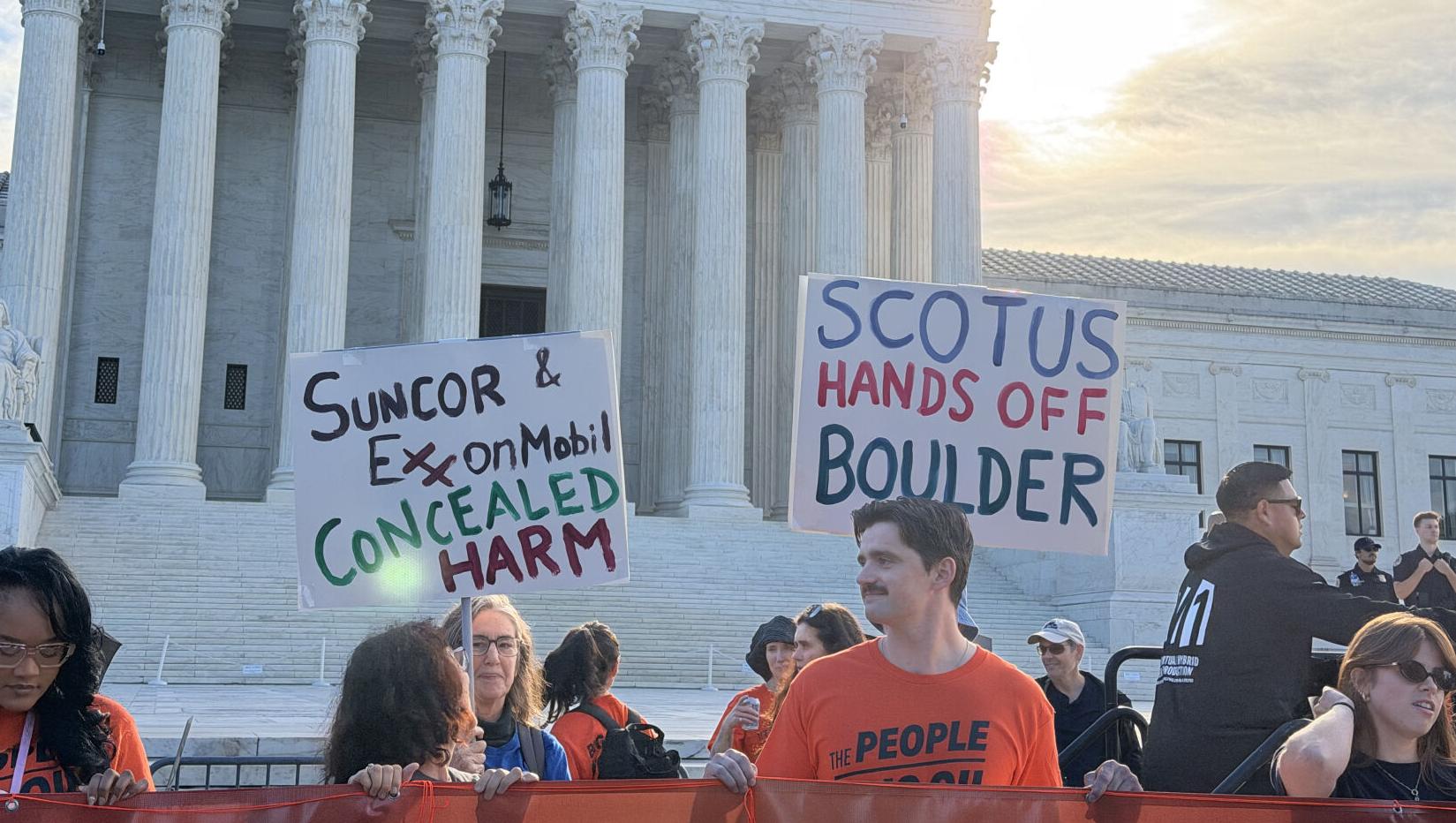
Justices on the nation’s highest court heard arguments Monday in Suncor v. Boulder, a case over whether lawsuits can move forward against energy companies potentially seeking billions of dollars in damages over alleged contributions to climate change.
Justice Samuel Alito recused himself from consideration in the case, in the midst of mounting scrutiny over his financial investments and ties to various energy companies.
Chief Justice John Roberts posed several difficult questions to parties represented in the case. He repeatedly asked lawyers for Suncor Energy whether federal law preempted states in climate litigation.
Carrie Severino, president of the Judicial Crisis Network, told The Center Square she believed Roberts had a deep understanding of the case through his questioning of Boulder County’s claims. Roberts questioned the structure of the county’s arguments in the case, and he suggested that the court was attempting to reduce emissions by regulating an energy company’s typical conduct.
“That told me the chief justice knows the deal,” Severino told The Center Square. “He sees what is really going on behind the scenes here.”
Several advocates in favor of Boulder County gathered for a demonstration outside the high court. Gretchen Goldman, president of the Union for Concerned Scientists, blamed the actions of Suncor and ExxonMobil for contributing to climate change and natural disasters in Colorado and around the world.
“The world is in danger of increasingly severe climate impacts,” Goldman said. “The worst harms are being imposed by communities that have contributed the least to the climate crisis.”
Goldman argued that energy companies were aware of contributions to climate change and did not step in appropriately.
Severino said Boulder should not have an outsized authority to regulate emissions across the country and the world. She said the litigation is an attempt to give Boulder extraordinary authority in the climate case.
“They want it to look like a regular tort claim,” Severino said. “This isn’t normally how tort law works, and it’s definitely a stretch, particularly the idea of causation, to argue that Suncor’s energy production that they are selling around the world can somehow be traced to particular harms that are happening in Colorado.”
Christopher Mills, the founder of law firm Spero Law, highlighted the chief justice’s question toward lawyers for Boulder County about similar lawsuits taking place based on the court’s end result.
“Presumably if you prevail the next day, a municipality in every single state will file a lawsuit,” Roberts said during oral arguments.
Kevin Russell, a lawyer for Boulder County, acknowledged a flurry of lawsuits could come from the high court’s decision.
“Potentially hundreds of different lawsuits over imposing overlapping liability based on events occurring outside all of the relevant municipalities or states,” Mills told The Center Square. “It’s hard to think that’s an acceptable state of affairs.”
Former Washington Gov. Jay Inslee also spoke in front of the high court on Monday. He said the Boulder case is an opportunity to make energy companies pay for damages in court.
Inslee argued that Congress did not preempt state and local governments from seeking relief due to climate change.
“We should not allow this court to go ‘presto, change-o’ and pull preemption out of nothing,” Inslee said. “There is nothing in the U.S. Congress to say they wanted to take away this right from Americans.”
Inslee said the high court’s case is primarily focused on allowing individuals to have an opportunity in court against energy companies. However, Severino said state and local governments behind the lawsuits are seeking to draw out legal processes against energy companies in order to harm the industry.
“You incentivize the parties to have to settle and pay out because the cost of continuing the litigation is simply so astronomical,” Severino said. “The day in court is not free, and it is absolutely part of a strategy to make energy companies pay a practical carbon tax, even if it’s not an official one.”
Inslee argued that courts must take on responsibility to mitigate the effects of climate change. He said the executive branch and Congress have not done enough to regulate the industry.
“At this very moment, the executive and the Congress is doing everything humanely possible to destroy our ability to deal with this deception and this fraud,” Inslee said.
Phil Goldberg, special counsel for the Manufacturers’ Accountability Project, said he was glad to see justices on the high court recognize the sweeping consequences in the case and hopes for an outcome in favor of Suncor Energy.
“The justices recognized that the claims in this case go far beyond conduct in any one state, which is why this lawsuit is inherently about interstate and global emissions,” Goldberg said in a statement to The Center Square. “We are hopeful that the Court’s focus on the fundamental problems with climate liability will lead it to clarify that the governance of interstate climate emissions belongs with federal policymakers, not state courts.”