


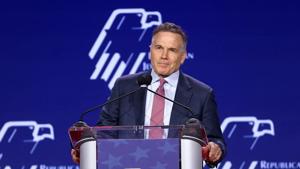
Arguing that the “window of opportunity for Pennsylvania is rapidly closing,” U.S. Sen. Dave McCormick penned a letter to Gov. Josh Shapiro urging him to opt the state into a federal school choice program.
“The benefit to our students could be substantial,” McCormick writes in a letter he sent to Shapiro last week, which was shared exclusively with The Center Square.
The federal program, signed into law by President Donald Trump, was enacted under the Working Families Tax Cut Act, part of the One Big Beautiful Bill Act.
This bill established a new federal tax credit of up to $1,700 for contributions made to a scholarship granting organization.
The Department of Education describes these organizations as “nonprofits that accept qualified contributions from individuals and use the funds to provide scholarships for education-related services at private or public schools, including tuition, fees, academic tutoring and classroom supplies.”
McCormick notes that if Pennsylvania opts in, students would qualify if their household income does not exceed 300% of the area median gross income, adjusted for family size.
The American Federation for Children, an organization that promotes school choice, estimates that approximately 1.8 million Pennsylvania students, or 89 percent of K-12 students, could qualify for these scholarships.
As of Nov. 10, 32 states have opted in, while two governors have vetoed opt-in legislation in their states, and two governors have announced they will not participate in the program.
A majority of the states that have opted in to federal school choice programs have Republican governors. However, a few Democratic-led states, including Colorado, New Mexico, and New York, have opted into the program.
Colorado Gov. Jared Polis, a Democrat, told The Colorado Sun that it was a no-brainer for the state to opt into the federal tax credit scholarship program, describing it as a “real boom of investment in kids.”
“It supports donors to give more money to our schools,” Polis said. “I mean, I would be crazy not to.”
Kentucky Gov. Andy Beshear, on the other hand, vetoed a bill that would have allowed the state to opt into the program.
“Kentuckians have said loud and clear: Public dollars should only be used for public education,” Beshear said, according to the Kentucky Lantern. “The Republican supermajority hasn’t listened. I have. Today, I am standing with our people and vetoing House Bill 1.”
However, in March, Kentucky’s Legislature overrode Beshear’s veto, resulting in the state’s opt-in to the federal program.
Pennsylvania is one of 15 states that have not made a decision yet.
When asked by The Center Square whether Shapiro was planning to opt Pennsylvania into the program, his office cited comments he made during a gubernatorial debate on Oct. 7.
“I’m very open to this,” Shapiro said during that debate. “We just received the guidance from the federal government just a few days ago. I tasked my agencies with determining how this would work in Pennsylvania under those federal requirements.”
“I expect in the next few weeks here to be able to make an announcement on opting in or not,” he continued.
Those comments from Shapiro were made just a few days after the Treasury released the proposed temporary regulations for the program.
When pressed during that debate about whether he was ready to make an announcement then, Shapiro responded, “not tonight.”
“Because we’re continuing to digest the federal regulations,” Shapiro said. “But I’ve also expressed my openness to this.”
“A number of governors have shut the door on it,” he continued. “Look, I believe in giving parents an opportunity to put their kids in the best position for them to succeed.”
However, in McCormick’s letter to Shapiro last week, the GOP senator argues that Pennsylvania “does not need to wait for final regulations.”
“Treasury has stated that states, scholarship organizations, and taxpayers may rely on the proposed rules for contributions made beginning January 1, 2027,” McCormick wrote.
Citing Pennsylvania’s Educational Improvement Tax Credit and Opportunity Scholarship Tax Credit programs, known as EITC and OSTC respectively, McCormick said that the Commonwealth is “well positioned to act” and noted those programs have given the state “administrative experience and a network of scholarship organizations to build on.”
“Families with means already have these options,” McCormick argued. “Every Pennsylvania child deserves the same opportunity, regardless of what their parents can afford.”
McCormick’s letter is the latest example of the full-court press from advocates of this program.
Senate President Pro Tempore Kim Ward, a Republican, has sent out four posts over the past week on social media advocating for the state to opt in, while the Commonwealth Foundation, a conservative think tank supporting school choice, has also applied public pressure to Shapiro on Thursday, noting that three Democratic governors have opted their respective states in.
McCormick has been advocating for the program for several months. In June, he held a press call with fellow advocates of the federal school choice program, where he touted its benefits while also expressing optimism that Shapiro would decide to opt Pennsylvania into it.
“I think that the rationale of this opportunity will hopefully convince him to opt in,” McCormick said in June. “I hope and expect he will.”
In April, U.S. Education Secretary Linda McMahon joined Republican lawmakers for a rally on the steps of the Capitol Rotunda in Harrisburg, and later spoke at a conservative conference about the program.
McMahon said that Shapiro has done “some good things” in Pennsylvania with regard to school choice, saying that there is a “very similar state tax provision” in place in the commonwealth.
State Treasurer Stacy Garrity, who lost to Shapiro by over 20 points in the race for governor last week, told 1210 WPHT in an interview on Tuesday that she was hoping Shapiro would decide to opt in, given that the election is now over.
At the state level, several GOP state senators and one Democrat, Anthony Williams, have introduced legislation that would require Pennsylvania to opt into this program.
However, some groups, like AFT Pennsylvania, have expressed opposition to tuition tax credits and voucher programs in the past, arguing it would take resources away from traditional public schools.
The Pennsylvania State Education Association, PSEA, issued a statement last month opposing the program.
“As expected, the new federal guidance ensures the program will contain all the most damaging features of existing voucher programs in other states, while limiting the ability of states to protect students or ensure meaningful benefits for public schools,” PSEA wrote in a newsletter in October. “PSEA continues to believe that public funding should go to public schools, not vouchers. Vouchers shift resources away from public schools, which serve 9 out of every 10 students, to private schools that are unaccountable to taxpayers.”