


Energy Department reports sinking U.S. fuel, diesel demand
U.S. demand for gasoline, diesel, and other transportation fuels dropped sharply last week, according to federal data released Thursday, continuing a months-long trend of falling domestic consumption as record-high retail prices squeeze consumer pocketbooks and strain the trucking industry.
Weekly data released by the U.S. Energy Information Administration showed that total petroleum products supplied to domestic markets-a key indicator of overall fuel consumption, consumer demand, and economic activity-averaged 20.1 million barrels per day over the last four weeks, down 3.7% compared to the same period last year.
According to AAA, the national average for regular gasoline hit $4.29 per gallon on Friday, while retail diesel rose to a record-high $6.06 per gallon.
Energy Department data shows U.S. consumption of gasoline, diesel, and jet fuel, all used to move goods and people, declined over the last four weeks versus the same period in 2025.
Average consumption of gasoline by American drivers during the last four weeks was down 1.4% compared to the same period in 2025 at 8.8 million barrels per day, while jet fuel fell 2.3% year-over-year, according to the report.
Domestic consumption of distillate products-primarily diesel fuel, the workhorse of the U.S. economy-was 2.6% lower than in the same four weeks last year at 3.7 million barrels per day, as commercial truckers scaled back operations and added surcharges in the face of soaring costs.
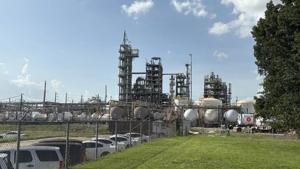
Meanwhile, U.S. refiners are running their plants “hot” at about 98% of capacity, up significantly from the typical historical range of 90% to 92%, notes Tulane Energy Institute Associate Director Eric Smith.
A shortage of refining capacity in the United States, the Kremlin’s suspension of diesel exports after Ukrainian drone strikes damaged roughly 40% of Russian refining infrastructure, and China’s limited overseas shipments of distillates in recent months are among many factors driving supply deficits, Smith told the Center Square.
Smith noted the Energy Department recently forecast the supply of diesel wont’ catch up with demand until the end of 2027, and he said it’s expected that “we’ll have higher prices for longer in the meantime.”
The Tulane educator said structural changes in supply chains caused by geopolitical events has meant U.S. pump prices are more tightly connected to volatile international markets. At the same time, Smith said officials in the Trump Administration are viewing the mismatch between supply in demand as a national security issue.
According to reporting by Reuters on Friday, White House officials are weighing whether to deploy emergency wartime authority under the Cold War-era Defense Production Act to mandate targeted expansions of domestic refining and crude capacity by bypassing state-level regulations.
Smith said the federal mandates could soon be expanded. “This is speculation, but with the Midterm elections approaching we might see an announcement by the federal government that it would simplify things for California-we’re going to mandate production of offshore oil and the utilization of the existing refineries, and there would be nothing the state could do to resist this,” Smith said.
Earlier this year, U.S. Energy Secretary Chris Wright invoked the Defense Production Act to override California environmental regulations and order Texas-based Sable Offshore Corp. to immediately restore operations of the idled Santa Ynez Unit pipeline, which connects refineries onshore to offshore oil rigs in the Santa Barbara Channel. Wright said in May that the mandate is necessary to preserve military readiness on the West Coast and to break the region’s dependence on foreign supplies of crude oil.
Wright’s action was issued under authorities provided by the Defense Production Act and delegated through Executive Order, “National Defense Resources Preparedness,” as amended by President Trump’s Executive Order, “Adjusting Certain Delegations Under the Defense Production Act,” according to the Energy Department.
“The Trump Administration remains committed to putting all Americans and their energy security first,” Secretary Wright said when he issued the order. “Unfortunately, some state leaders have not adhered to those same principles, with potentially disastrous consequences not just for their residents, but also our national security. Today’s order will strengthen America’s oil supply and restore a pipeline system vital to our national security and defense, ensuring that West Coast military installations have the reliable energy critical to military readiness,” said Wright.
Houston-based Sable Energy’s Ynez Unit in the Santa Barbara Channel can produce approximately 50,000 barrels of oil per day, which can replace nearly 1.5 million barrels of foreign crude each month, according to the Department of Energy.
Tulane’s Smith said California’s deposits of heavy oil, which are rich sources of diesel fuel, are the biggest in the United States by far. Longer term, he said, California refineries could be reconfigured to process heavy oil produced in the state while Venezuela could supply the U.S. Gulf Coast.
“There’s a certain amount of logic to this because of California’s heavy oil deposits,” Smith said. “They discovered oil in California in 1890, but they don’t want to produce it there.”