


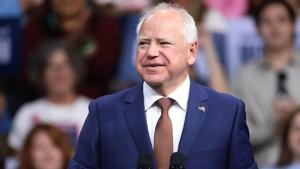
Republican efforts to impeach lead Democrats in Minnesota ran aground this week following a partisan deadlock in committee.
The House Rules and Legislative Administration Committee split along party lines, preventing the resolutions from advancing and effectively halting a push to investigate Gov. Tim Walz and Attorney General Keith Ellison over alleged failures to address the state’s alleged widespread fraud.
House Republican Floor Leader Harry Niska, R-Ramsey, who co-chairs the committee, said the push for impeachment was driven by reports that there have been billions of taxpayers dollars lost to fraud in state-administered programs during Walz’s time in office.
“What most Minnesotans are demanding, especially today on tax day, is accountability for the multi-billion-dollar fraud scandal that’s embarrassing our state,” Niska said. “In any well-functioning business, a multi-billion-dollar fraud scandal would result in the CEO either resigning in disgrace or being fired.”
Niska argued impeachment is the legislature’s primary tool to hold top officials accountable.
Rep. Ben Davis, R-Merrifield, who sponsored the resolution targeting Ellison, said the scale of alleged fraud warrants an extraordinary response.
“We have an historic amount of fraud taking place in our state; historic actions are warranted,” Davis said.
The resolutions called for the House Fraud Prevention and State Agency Oversight Policy Committee to conduct impeachment investigations into “state officers” and report back by May 1 with potential articles of impeachment or other recommendations.
Walz’s impeachment resolution centered around allegations that Walz failed to act on warnings about fraud in state programs, allowed misuse of taxpayer funds to continue, and placed political considerations above enforcement of the law.
A separate resolution against Ellison accused the attorney general of “corrupt conduct in office and for crimes and misdemeanors,” including failing to impartially enforce the law, undermining protections for religious liberty, and suggesting political or financial support could influence official actions.
Democrats sharply criticized the impeachment efforts, calling them unserious and politically motivated.
Rep. Sydney Jordan, DFL-Minneapolis, described the resolutions as a “simple, stupid distraction,” “garbage,” and a “political circus,” arguing lawmakers should instead focus on preventing fraud going forward.
“Have there been crimes, charges and convictions for our executives? No,” Jordan said. “Do we impeach Minnesota’s elected officials just because we don’t like them? No.”
Jordan added that while fraud has occurred, the legislature should prioritize policy solutions rather than impeachment.
“We could be working on those instead of doing this and listening to people just air grievances against Keith Ellison and Tim Walz,” she said.
Other Democrats echoed that sentiment.
Rep. Michael Howard, DFL-Richfield, said it is “tough to take this seriously,” while Rep. Nathan Coulter, DFL-Bloomington, called the resolution “the most harebrained thing I think I have ever seen.”
Republicans pushed back on that characterization.
“Holding people accountable for $9 billion of fraud I don’t see as harebrained and I don’t think the people of Minnesota do either,” said Rep. Peggy Scott, R-Andover. “The people of this state want accountability.”
Despite Republican control of the House Fraud Prevention and State Agency Oversight Policy Committee, the resolutions had to first clear the Rules Committee-where Democrats had the votes to block them. With the tie vote on Wednesday, the impeachment push is effectively stalled.
In an exclusive interview with state Rep. Kristin Robbins, R-Maple Grove and chair of the House Fraud Prevention and State Agency Oversight Committee in the Minnesota legislature, she explained that the full scope of potential government knowledge of the fraud at the state level remains unclear.
“The real answer is, I don’t know,” she said when asked how deep potential wrongdoing might go.
Robbins said an ongoing lack of responsiveness from state agencies has only deepened those concerns.
“We have put out dozens of data requests that we have not gotten answers to,” she said. “I definitely think it’s beyond just mistakes . . . there is willful neglect and malfeasance.”