


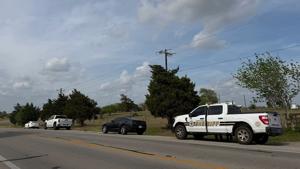
Five years into Operation Lone Star, apprehensions of illegal border crossers are ongoing in Texas border communities and throughout south Texas. The greatest number of apprehensions are occurring in the Rio Grande Valley and Coastal Bend regions of Texas where an OLS Task Force is operating in full force led by Goliad County Sheriff Roy Boyd.
A new report by the Texas Department of Public Safety Border Security Operation’s Center obtained by The Center Square details how many people are being apprehended and how much drugs are being seized in south Texas counties.
Gov. Greg Abbott launched Operation Lone Star in March 2021 as the border crisis escalated. Under the Biden administration, Texas was inundated with the bulk of illegal border crossers along the southwest border – roughly two million or more a year including those who evaded capture. Under the Trump administration, illegal crossings have dropped by more than 95%, but they are still ongoing.
The report breaks down apprehensions with a map of where illegal crossings occurred as well as quantities of drugs that were seized. It covers the U.S. Customs and Border Protection sectors of Big Bend, Del Rio, El Paso, Laredo and Rio Grande Valley and a joint task force region in the Coastal Bend.
In the Big Bend Sector, the majority of illegal entries occurred in Brewster and Terrell counties. The sector saw record high illegal crossings during the Biden administration and a record drop under the Trump administration, The Center Square reported. Last month, 186 illegal border crossers were apprehended and 1,200 pounds of marijuana was seized in the sector, according to the data.
In the Del Rio Sector, nearly 1,000 illegal border crossers were apprehended in Val Verde, Kinney, Maverick, Zavala, Dimmit, Kerr, Gillespie and Sutton counties. The data indicates that illegal foreign nationals are still making it into the interior of Texas as gotaways – those who illegally enter between ports of entry and evade capture. They are being apprehended in rural areas roughly 100 miles from the border in Kerr, Gillespie and Sutton counties, for example, according to the data. If OLS operations weren’t ongoing, they’d still be living illegally in Texas, authorities argue.
The greatest volume of drugs seized in the sector was of meth (337 pounds) and cocaine (273 pounds), according to the data.
In the Laredo Sector, 1,200 apprehensions were reported. The majority were near Laredo in Webb and Zapata counties, followed by La Salle County. Large quantities of meth and cocaine were also seized in the sector, comparable to the volume seized in the Del Rio Sector.
In the Rio Grande Valley Sector, nearly the entire border in Starr, Hidalgo and Cameron counties is red on the map, signifying apprehensions. Apprehensions were also made in Brooks, Kenedy and Willacy counties.
Apprehensions in this sector also include those made in the Coastal Bend region where the OLS Task Force is operating. The majority of apprehensions in this region occurred in Goliad and Lavaca counties, according to the data. Apprehensions are also being made in neighboring Task Force member counties as illegal border crossers attempt to head north to Houston along Highway 59 or attempt to go around it and get apprehended in Atascosa, Bee, Calhoun, Fayette, Jackson, Jim Wells, Karnes, Live Oak, Nueces, Refugio and San Patricio counties, according to the data.
More than 1,700 were apprehended in these counties in March. More than 4,000 pounds of meth, nearly 900 pounds of marijuana and more than 500 pounds of cocaine were also seized in these counties, according to the data.
From March 2025 to March 2026 a motion-detection camera system DPS uses along the border detected nearly 23,000 illegal border crossers. It also led to the seizure of more than 6,200 pounds of marijuana and nearly 2,000 pounds of meth, according to the data.
Texas DPS has been using the system for many years. In 2014, the system helped law enforcement apprehend more than 29,300 illegal border crossers and seize 88,400 pounds of drugs, DPS said. At the time, Texas was experiencing a border crisis under the Obama administration. No comparable Operation Lone Star or federal enforcement actions existed. Yet Texas was combatting the same threats posed by Mexican cartels, Texas sheriffs argue.
“Mexican cartels continue to pose the most significant organized crime threat to Texas. In fact, seven of the eight cartels currently have command and control networks operating in the state, moving drugs and people into the United States, and transporting cash, weapons and stolen vehicles back to Mexico,” DPS said 12 years ago.
“Every day, sheriff’s deputies, police officers, Border Patrol agents and state law enforcement officers in the Texas border region risk their lives to protect Texas and the entire nation from Mexican cartels and transnational crime,” former DPS Director Steve McCraw said at the time. “This innovative use of technology has proven to be a force multiplier in detecting the smuggling attempts along the border, which is critical to interdicting criminal activity occurring between the ports of entry.”
Since then, other force multipliers have been put in place through OLS: equine, canine, brush, marine and air teams, an OLS Task Force, expanded federal partnerships, and record funding allocated by the Texas legislature, The Center Square has reported.