


With the Trump administration taking steps to curb food stamp fraud, some fiscal watchdogs argue that shifting the consequences of fraud from the federal government to states is the only long-term solution.
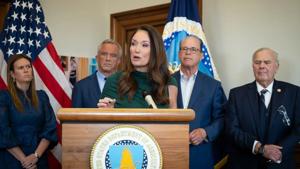
The U.S. Department of Agriculture is combing through state’s SNAP recipient data to reduce ineligible enrollment, though USDA Secretary Brooke Rollins said Monday that 22 Democrat-governed states have refused to provide data. Rollins has also floated the idea of mass-recertification, though she walked back the proposal after widespread backlash.
The Cato Institute, a libertarian think tank, says that these measures are only short-term solutions that do nothing to incentivize states to crack down on fraud themselves. Romina Boccia, Cato’s director of budget and entitlement policy, argues that states should be responsible for covering 100% of both program benefits and administrative costs.
While the SNAP reforms in Republicans’ budget reconciliation bill “were a step in the right direction,” Boccia told The Center Square, “the ideal is for states to assume full responsibility for how they run and fund their programs.”
“That would give them both the flexibility and the accountability to operate SNAP more efficiently and tailor benefits to the needs of their residents,” Boccia said. “That is superior to today’s SNAP structure, where states face almost no incentive to control costs because they can simply pass the bill to federal taxpayers.”
For decades, the federal government has funded 100% of SNAP benefits and 75% of administrative costs, with states covering the remaining 25%.
Republicans’ reconciliation bill, among other changes, increased states’ share of administrative costs to 50%. Beginning in fiscal year 2028, it also forces states with payment error rates between 6% and 8% to cover 5% of benefits costs, with the cost share rising to 15% for states with payment error rates of 10% or above.
As of 2024, states have an average SNAP payment error rate of just under 11%, with Alaska having the highest error rate of just under 25%, according to USDA data.
Democratic lawmakers have argued that the greater portion of SNAP costs states have to cover, the more states will have to either raise taxes or cut recipients’ benefits.
But Boccia, who supports block-granting SNAP and gradually reducing the federal government’s share of SNAP benefits to zero, pointed to similar program reforms that not only helped reduce fraud but also reduced ballooning enrollment.
“States with high caseloads might need to raise taxes to sustain their current enrollment, but we saw after the 1996 welfare reforms – when TANF was block-granted – that states tend to right-size and better target their programs rather than hike taxes to support very large welfare rolls,” Boccia said. “And even if a state chose to raise taxes, voters could hold their own legislators directly accountable for how those dollars are spent.”
The federal government spent $99.8 billion on 41.7 million SNAP recipients in fiscal year 2024, USDA data shows, a 12% decrease from the previous year.
“Any safety-net program should aim to reduce dependency and promote self-sufficiency,” Boccia said. “The goal of welfare, in most cases, should be to help people move off welfare, not onto it.”